Cute Sanil Embroidery Design
First Impression: Sweet, Playful, and Instantly Recognizable
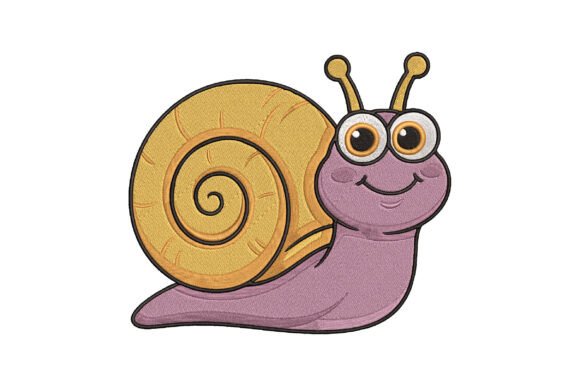
As an embroidery designer who’s prepped over 200 craft fair booths—and watched thousands of shoppers pause at a single stitch—I’ll say it plainly: Cute Sanil Embroidery Design lands with quiet charm. It’s not bold or edgy. It’s not rustic or vintage. It’s garden-soft, gently whimsical, and emotionally warm. That smiling snail with big expressive eyes and a spiral shell reads as friendly, unhurried, and kind—exactly the vibe parents, plant lovers, and mindful makers gravitate toward at handmade markets. In a booth full of florals and foxes, this design stands out by being unapologetically sweet without slipping into cloying. That’s rare. And sellable.
Where It Shines: Craft Fair Product Pairings That Convert
This isn’t a one-size-fits-all machine embroidery design—and that’s its strength. Cute Sanil Embroidery Design thrives where personality meets practicality:
- Tote bags: Centered on natural canvas or oat linen, it reads clearly from 6 feet away. The spiral shell gives visual rhythm; the smile invites touch. A top seller for nursery-themed booths and eco-conscious shoppers.
- Aprons: Positioned just above the pocket or on the bib, it adds handmade warmth without overwhelming function. Works especially well on lightweight cotton or chambray—fabrics that let the stitch detail breathe.
- Tea towel embroidery: On flour-sack or waffle-weave towels, the design holds up beautifully—even after washing. The snail’s rounded shape complements the towel’s soft drape, and the expressive eyes catch light in sunlit market stalls.
- Embroidered patches: Perfect for iron-on or sew-on use on denim jackets, backpacks, or baby onesies. At 2.5–3 inches wide, it scales down cleanly—no lost details, no thread crowding.
- Pillow covers & small pouches: Here, Cute Sanil Embroidery Design becomes a signature accent—not background noise. Paired with muted sage, clay, or buttercream fabric, it elevates a simple item into a giftable handmade product.
It’s less effective on curved cap surfaces (the smile flattens; the shell loses dimension) and struggles on heavily textured towels unless stitch density is carefully adjusted. More on that below.
Real-World Production Notes Every Embroidery Designer Should Check
Before loading your hoop, run these checks—especially if you’re batch-producing for a craft fair weekend:
- Test on scrap fabric first—not just muslin, but the exact fabric you’ll use (e.g., terry cloth for towels, twill for caps). Stitch density matters more than file size.
- Verify thread contrast: That “smiling snail” relies on clean eye definition. On dark fabric, use pale yellow or ivory thread for the face + shell highlights—not just black-on-white assumptions.
- Review spacing and underlay: Spiral shells can trap thread if fill stitches are too tight. Look for smooth transitions—not stair-stepping—between shell layers.
- Confirm hoop size compatibility: Does it fit comfortably in your most-used hoop? If it pushes 4x4 limits, consider simplifying the shell outline for faster turnaround during fair prep.
- Use appropriate stabilizer: Lightweight cutaway for knits, tear-away for stable wovens, and fusible + tear-away combo for tea towels. Skipping this step turns “adorable” into “blurred.”
- Create at least one real mockup—not just a printable mockup. See how light hits the raised stitches in person. Does the smile still read? Does the shell shimmer or flatten?
- Compare fabric colors side-by-side: A mint snail on sage linen reads serene; the same file on olive duck cloth can mute expression. Swatch before stitching.
- Confirm commercial licensing: Since this is positioned for nursery and handmade markets, ensure your digital embroidery file permits resale of finished products. Don’t assume.
What Buyers Actually Notice—And Why It Sells
At a craft fair, attention lasts 1.7 seconds. Cute Sanil Embroidery Design wins because it delivers three things instantly: recognition (snail = garden, slow living, childhood), emotion (that smile triggers warmth), and handmade quality (spiral shell implies care, not speed). It doesn’t shout—it leans in. That makes it ideal for booth displays where customers linger, point, and say, “Oh, that’s *us*.”
For Etsy sellers, it photographs exceptionally well: soft shadows highlight stitch texture, and the rounded shape avoids harsh edges in flat-lay shots. As a small shop product, it reinforces brand consistency—think cohesive nursery bundles (snail + mushroom + ladybug designs) or seasonal garden collections. And yes—it feels repeatable. You can embroider 30 tote bags in a weekend without visual fatigue, because the design’s simplicity carries its own rhythm.
Careful-Use Notes: Where Clarity Can Fade
This design shines—but it has boundaries. Avoid using Cute Sanil Embroidery Design when:
- Stitching on thick, napped fabrics like fleece or heavy terry—dense shell areas may pucker or lose definition.
- Scaling below 1.8 inches wide—the eyes and smile begin to merge, weakening expressiveness.
- Using low-contrast thread on dark or busy prints—details vanish instead of delight.
- Skipping stabilizer on textured tea towels—the shell spiral may sink into the weave.
- Assuming it works on all cap curves—the forehead curve distorts facial proportion unless digitized for 3D surface adaptation.
No design is universal. But this one knows its lane—and stays charming inside it.
Final Thought: A Quiet Anchor for Your Handmade Line
In a market flooded with fast trends, Cute Sanil Embroidery Design is a gentle anchor. It doesn’t chase virality—it invites connection. For embroidery business owners building a recognizable style, for Etsy sellers curating thoughtful nursery collections, and for craft fair vendors who want items that spark conversation *and* close sales—it’s more than a digital embroidery file. It’s a tiny, stitched story people want to carry home.