Dog Dad Fist Bump Machine Embroidery
A Designer’s First Look: Playful, Punchy, and Purpose-Built
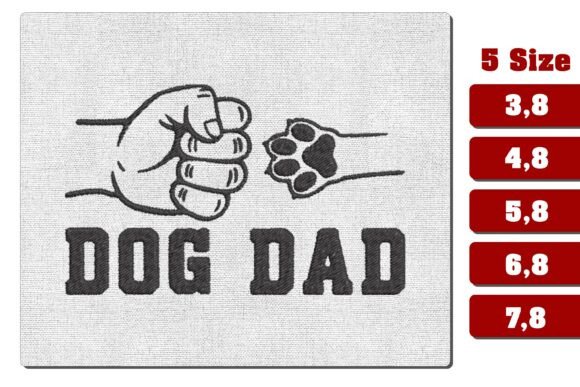
When I opened the Dog Dad Fist Bump Machine Embroidery file for the first time, I didn’t see just another Father’s Day motif—I saw a tight, confident composition that lands like a friendly nudge. The fist bump is centered, clean-lined, and slightly stylized—not cartoonish, not overly detailed—just warm, approachable, and unmistakably human (and canine). It’s got rhythm: the dog’s head leans in just enough, the dad’s arm has natural angle and weight, and the negative space around them breathes. This isn’t a design that fights your fabric—it invites it.
Real Project Test: A Custom Sweatshirt for a Local Dog Rescue Pop-Up
Last month, I used the 5.8 in size of Dog Dad Fist Bump Machine Embroidery on a charcoal heather crewneck sweatshirt for a rescue’s “Paws & Pride” fundraiser. We stitched it front-and-center, left chest height, on midweight cotton-poly blend. The result? Instant recognition, zero confusion. Customers paused, smiled, said “That’s *us*,” and reached for their wallets. That tells me this design works as both visual shorthand and emotional anchor—especially when paired with real-world context. It doesn’t need explanation. It earns trust fast.
Where It Shines—and Where to Pause
Dog Dad Fist Bump Machine Embroidery excels on structured, medium-to-heavy fabrics: tote bags, aprons, pillow covers, tea towels, and unstructured caps. Its balanced proportions hold up beautifully at 4.8 in on a denim tote and 6.8 in on a baby blanket hem. The stitch layout feels intentional—not overloaded with fill stitch density, but grounded with smart satin stitch definition on the fists and dog’s muzzle. That means fewer thread breaks, cleaner trims, and less stabilizer bleed-through on light-colored cotton.
That said, I’d avoid pushing the smallest size (3.8 in) onto curved surfaces like baseball caps unless you’ve tested it on your exact cap style and hoop setup. Tiny corners on the knuckles can feather or lose crispness if tension or stabilizer isn’t dialed in. Also, on thin or stretchy fabrics—think ribbed baby onesies or lightweight tees—use cutaway + tear-away combo stabilizer, not just basic tear-away. The design’s charm lies in its clarity; blur the edges, and you blur the message.
Fabric & Background Matters More Than You Think
I ran quick mockups in black and white before stitching: the design reads cleanly on dark fabric (especially with high-contrast thread like bright white or kelly green), but loses some warmth on pure black. On ecru or oatmeal linen tea towels? Perfect. On navy twill? Still strong—but I swapped to navy thread for the dog’s collar and kept white for the fist to keep hierarchy intact. Always test thread colors against your actual fabric—not just the screen preview. What looks bold on a monitor can mute fast under studio lighting or sunlight.
For Sellers & Small Business Makers: Value Beyond the Stitch
If you’re an Etsy seller or boutique owner, this machine embroidery design is quietly versatile. It fits neatly into seasonal bundles (“Dad + Dog Bundle”), pairs well with minimalist monogram add-ons, and scales naturally across product types—from $28 embroidered patches (use the 3.8 in or 4.8 in) to $78 personalized sweatshirts (6.8 in or 7.8 in). Customers don’t buy “a fist bump.” They buy pride, inside jokes, shared identity. That makes Dog Dad Fist Bump Machine Embroidery more than decoration—it’s brand reinforcement for handmade product lines rooted in authenticity.
I’ve seen too many small shop listings fail because the embroidery file looked great in a digital mockup but fell flat stitched. This one avoids that trap. The shapes are generous, the line weights consistent, and the spacing between elements gives your machine room to breathe—no frantic jump stitches or awkward pauses mid-design.
Design Notes Every Embroiderer Should Check Before Stitching
- Test first on scrap fabric—same type, same stabilizer, same thread brand you’ll use for the final piece.
- Confirm hoop size matches your chosen size: 3.8 in fits most 4×4 hoops comfortably; 7.8 in needs at least a 8×12 or larger.
- Inspect small details in your software: look for stray running stitch anchors or tiny isolated satin columns near the dog’s ear or wrist crease.
- Review stitch density visually—if fill areas look overly dense or sparse in preview mode, adjust underlay or reduce density by 5–10% before stitching.
- Check licensing: confirm whether the digital embroidery file permits commercial use for finished products (like embroidered patches sold on Etsy) or resale of the file itself.
- Use proper stabilizer—especially for textured fabrics like terry cloth towels or fuzzy fleece blankets.
- Compare light/dark backgrounds in printable mockups before listing—customers rely on those visuals to imagine the finished product.
Final Thought: It’s Not Just Cute—It’s Cohesive
As a designer who reviews hundreds of embroidery files a year, I judge Dog Dad Fist Bump Machine Embroidery not by how many hearts it gets on social media, but by how well it holds up under real conditions: after washing, after wear, after being gifted, after sitting on a shelf beside ten other handmade items. It delivers clarity without stiffness, warmth without clutter, and personality without pretense. Whether you’re building a craft business, launching holiday embroidery collections, or stitching a single personalized gift, this design earns its place—not because it’s trendy, but because it’s thoughtfully built for people who actually embroider.