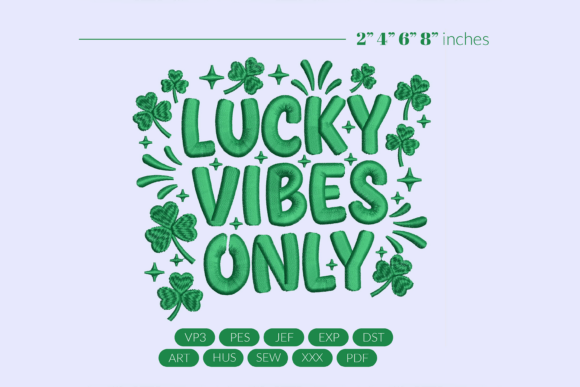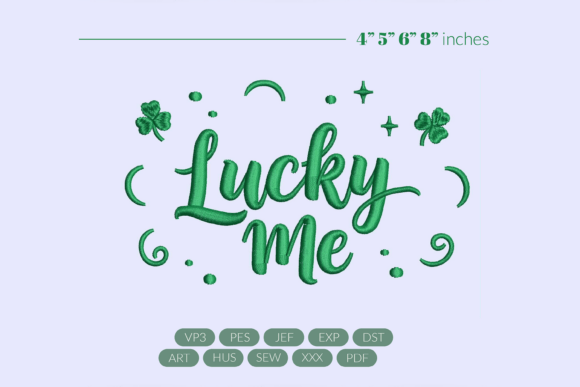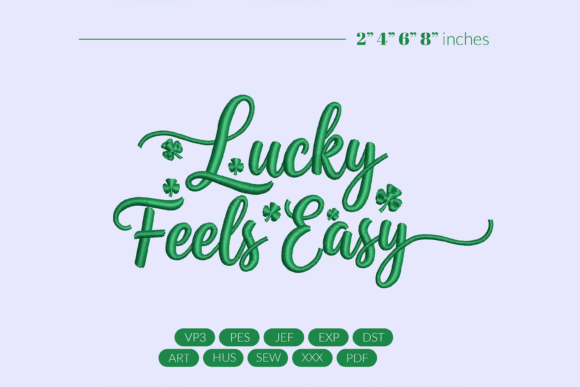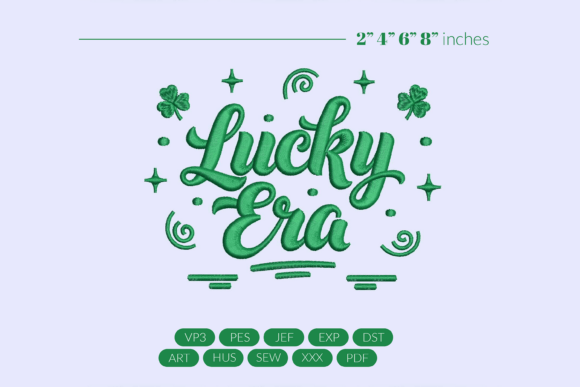
Happy Lucky Clover Embroidery Design
A Smiling Clover That Actually Stitches Well—Here’s What It Does (and Doesn’t) Deliver
I tested the Happy Lucky Clover Embroidery Design last week on a custom-ordered organic cotton tote bag for a local boutique—part of their St Patrick S Day collection. Not as a quick mockup, but as a real client project: tight deadline, no room for rework, and high expectations for that handmade charm customers pay extra for. Here’s what I learned—not from the product listing, but from thread snips, stabilizer scraps, and three rounds of stitching across different fabrics.
First Impression: Playful, Not Precious
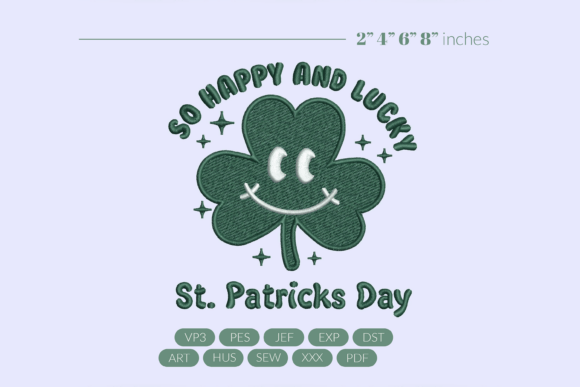
The design lands exactly where it promises: cheerful, uncomplicated, and unapologetically festive. The clover has rounded, friendly leaves and a soft smile—not cartoonish, not cutesy to the point of distraction. The text “So Happy and Lucky” curves gently beneath it, sized just right to read clearly at 3–4 inches wide. This isn’t an applique design or a dense monogram; it’s built for clarity over complexity. That matters when you’re stitching on textured canvas or lightweight baby onesies—the shapes hold up without relying on fine detail.
Where It Shines in Real Projects
- Custom apparel: On a midweight cotton sweatshirt, the stitch density felt balanced—no puckering, no floatiness. The satin stitch on the clover edges stayed crisp, and the running stitch accents in the stem added subtle movement without overwhelming the fabric.
- Tote bag design: Worked beautifully centered on the front panel. The proportions filled the visual space without crowding handles or seams. Customers responded well to the warmth—it reads as handmade, not mass-produced.
- Baby embroidery: Stitched on a gauzy muslin burp cloth with light tear-away stabilizer, the design retained its shape and legibility—even after two gentle machine washes. No fraying, no letter distortion.
- Embroidered patch: Hooped on twill backing, then heat-applied to denim aprons for a craft fair. Held up through wear, laundering, and repeated iron-on application. The clean outlines made cutting and finishing efficient.
- Holiday embroidery for small shop products: Paired with simple green thread on cream tea towels, it elevated a basic item into a seasonal bestseller. Etsy sellers will appreciate how easily it translates into printable mockups—no complex shadows or gradients to complicate digital previews.
Where You’ll Want to Pause—and Test
This isn’t a one-size-fits-all machine embroidery design. Its friendliness has limits, and skipping prep can cost time and trust.
- Small hoop sizes: Below 4" x 4", the text starts to feel cramped. The “So Happy and Lucky” line loses breathing room—letters blur slightly, especially on stretchy knits. Stick to 5" x 7" or larger for reliable results.
- Dark or textured fabric: On black terry cloth towels, the fill stitch needed a second pass with higher thread tension to avoid slight transparency. Always test thread colors—kelly green pops, but olive or sage may mute the “happy” energy.
- Curved surfaces: Tried it on a structured cap front—hooping was stable, but the clover’s top leaf flattened slightly at the crown curve. Best reserved for flat or gently contoured areas unless you’re using specialty cap hoops and precise digitizing adjustments.
- Frequent-wash items: While it held up on baby items, I’d avoid placing it near high-friction zones (like underarm seams on tees) without reinforcing the back with cutaway + tear-away combo stabilizer.
What It Adds to Your Finished Product—Beyond the Thread
That “smiling clover” does more than decorate. It signals intention. When customers see this on a personalized gift or boutique product, they register warmth, approachability, and seasonal thoughtfulness—not just decoration. For Etsy sellers, it strengthens brand consistency in holiday collections without requiring custom illustration. For craft business owners, it’s a versatile design asset that works equally well as a standalone motif or part of a coordinated set (think: matching pillow cover + kitchen towel + baby bib).
It also builds customer trust. Because the layout is generous and legible—not overly tight or intricate—stitching errors are rare. Fewer do-overs mean faster turnaround, cleaner finished product presentation, and fewer negative reviews about “fuzzy lettering” or “wonky clover.” That professionalism compounds quietly across every order.
Practical Designer Notes Before You Stitch
- Test the Happy Lucky Clover Embroidery Design on scrap fabric *first*—especially if pairing with textured or dark materials.
- Check stitch density visually in your embroidery software. If it looks heavy in the clover center, consider reducing fill density by 5–10% for lightweight fabrics.
- Confirm hoop size compatibility. Don’t assume it fits your standard 4" x 4"—verify before prepping a client garment.
- Inspect small details: the smile curve, the spacing between “So” and “Happy,” and the clover’s leaf separation. These define readability at smaller scales.
- Run black-and-white mockups. Some thread combos (e.g., lime green on white) look vibrant on screen but flatten in stitch—test contrast early.
- Use appropriate stabilizer: light cutaway for knits, tear-away for stable wovens, and fusible + tear-away for delicate baby items.
- Review licensing carefully before selling finished items or bundling the digital embroidery file. This affects your craft business legally—not just aesthetically.
Final Thought: A Reliable Spark, Not a Standalone Statement
The Happy Lucky Clover Embroidery Design won’t redefine embroidery artistry—but it doesn’t need to. It delivers what working designers and small shop owners actually need: a joyful, functional, seasonally resonant motif that stitches cleanly, sells consistently, and feels authentically handmade. Use it where warmth matters more than wow-factor: on a child’s first St Patrick S Day outfit, a café’s staff apron, a teacher’s thank-you tote, or a boutique’s limited-run holiday line. It’s not flashy. It’s faithful. And in embroidery—where time, thread, and trust are all finite—that’s worth more than luck.