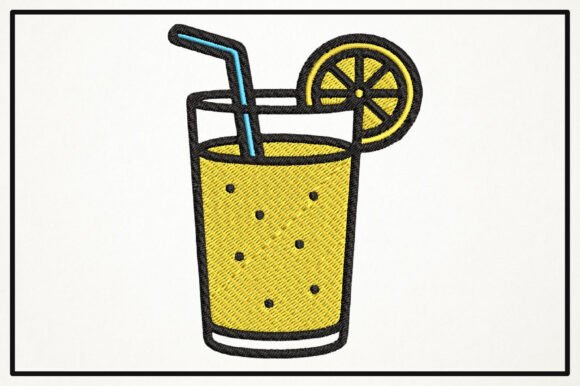
Lemon Juice Glass Embroidery Design
A Designer’s First Look: Bright, Bold, and Unapologetically Summer
As an embroidery designer who’s developed over 200+ sweatshirt-ready motifs for boutique brands, my first impression of the Lemon Juice Glass Embroidery Design is immediate: it’s a breath of citrus air. The description—“refreshing and minimalist lemon juice glass embroidery design featuring a vibrant yellow drink”—tells me this isn’t just another fruit motif. It’s a mood, a moment, a tiny still life stitched in thread. Visually, I imagine clean lines framing a tall glass with condensation hints, a single wedge perched on the rim, and that unmistakable sunny yellow liquid rendered through intelligent thread layering—not flat fill, but dimensional saturation. That “minimalist” cue is critical: it suggests thoughtful negative space, intentional stitch economy, and a layout that won’t overwhelm fabric texture. For a small shop launching a summer capsule, this isn’t decoration—it’s storytelling in under 3 inches.
How It Lives on Real Sweatshirts (Not Just Mockups)
This design thrives where many citrus motifs fail: on neutral and textured grounds. On heather grey or oatmeal French terry, the vibrant yellow pops without shouting—ideal for a premium boutique brand that values quiet confidence over loud graphics. On deep charcoal or navy sweatshirts? It gains sophistication, almost like a cocktail illustration on a bar menu—elegant but approachable. Pastel lavender or mint hoodies soften its energy into something gently playful, while oversized, slouchy hoodies let the glass sit comfortably above the chest pocket, not swallowed by volume. And yes—it works beautifully as a sleeve accent on rolled cuffs or as a subtle back yoke detail on cropped or boxy styles. It’s inherently lifestyle-friendly: think flat-lay photos with linen napkins, ceramic mugs, and sun-dappled light—exactly the aesthetic that converts scrollers into buyers on Etsy or Instagram.
Why It Feels Like a Boutique Brand Asset—Not Just a Digital Embroidery File
The Lemon Juice Glass Embroidery Design reads as intentional, not algorithmic. Its minimalism avoids cuteness overload (no winking lemons here), and its citrus focus sidesteps cliché by centering the *experience*—refreshment, pause, brightness—rather than just the fruit. That makes it highly adaptable across brand voices: feminine but not saccharine, casual but not sloppy, modern but not cold. For a handmade product, that nuance builds instant buyer trust. When customers see this stitched cleanly on a heavyweight cotton blend sweatshirt, they don’t see “machine embroidery design”—they see craft intention. It elevates the entire small shop product, turning a basic hoodie into a collectible seasonal piece. In a crowded digital embroidery file marketplace, that perceived value directly impacts conversion rates and repeat purchases.
Practical Considerations for Commercial Embroidery
Before stitching, every experienced decorator asks: will this hold up? Here’s my real-time assessment:
- Thread colors: A true vibrant yellow is non-negotiable—substitute tones mute the refreshment factor. Pair it with crisp white for the glass and a soft grey or ecru for subtle shadows. Avoid black outlines unless the design explicitly includes them; minimalism relies on clean edges, not cartoonish definition.
- Stitch density: Given the “minimalist” descriptor, I expect moderate density—enough to prevent fabric show-through on midweight sweatshirts, but not so heavy it stiffens the chest panel. Critical for comfort-focused apparel.
- Fabric & stabilizer: Works best on stable, medium-to-heavy knits (8–10 oz fleece). For softer, drapey fabrics, a lightweight cutaway stabilizer prevents puckering around the glass rim and straw base. Skip tear-away on thick fleece—it won’t release cleanly.
- Hoop size & placement: Designed for standard chest placement (3.5–4.5” wide), it should fit comfortably in a 5” x 7” hoop without awkward stretching. Confirm hoop size before production—especially if scaling for back designs.
- Small-size readability: At 3” tall, the glass shape and yellow fill remain legible. The straw (implied by “stra” in the description) must be distinct—not a thin line lost in stitching. Test stitch at actual size before bulk runs.
- Washing durability: With proper digitizing (smooth satin stitches for glass edges, dense fill for yellow), this holds up beautifully to home wash cycles—key for customer retention and reviews.
Beyond the Stitch: How This Design Strengthens Your Creative Business
For an Etsy seller or small clothing brand, the Lemon Juice Glass Embroidery Design does more than decorate fabric—it sharpens visual recognition. Repeat customers begin to associate that clean citrus silhouette with your shop’s seasonal drops, building organic brand recall. It’s versatile enough for limited-edition bundles (“Summer Citrus Set” with matching tote and tea towel), yet distinctive enough to stand alone as hero merchandise. When styled in printable mockups or lifestyle photography, it performs exceptionally well—bright but not garish, simple but not forgettable. That balance is rare in digital embroidery files focused solely on trend-chasing. This feels like a design asset built for longevity, not just virality.
A Final Note for Thoughtful Creators
While the description promises vibrancy and minimalism—and those qualities shine through conceptually—always verify technical specs before commercial embroidery. Check the actual stitch count (to assess density and run time), confirm compatibility with your machine format (.dst, .pes, etc.), and review any included color charts or placement guides. If you’re sourcing from a Wine-adjacent category (unexpected, but possible given flavor associations), double-check that the file is optimized for apparel—not wine labels or coasters. Because when you’re investing time, thread, and reputation into a boutique brand launch, the right machine embroidery design doesn’t just finish the garment—it finishes the story.